Why Community Living Is Influencing Homebuying Decisions in 2026
A home used to be defined primarily by what happened inside the front door. Today, that definition is changing.
For many buyers, the neighbourhood, clubhouse, green spaces, recreational facilities, children’s areas, social spaces and overall community experience are becoming part of the home itself.
This is driving growing interest in community living and lifestyle homes across India’s residential market.
The shift is especially visible among families and younger homebuyers who want their property to support not just where they live, but how they live.
What Is Community Living?
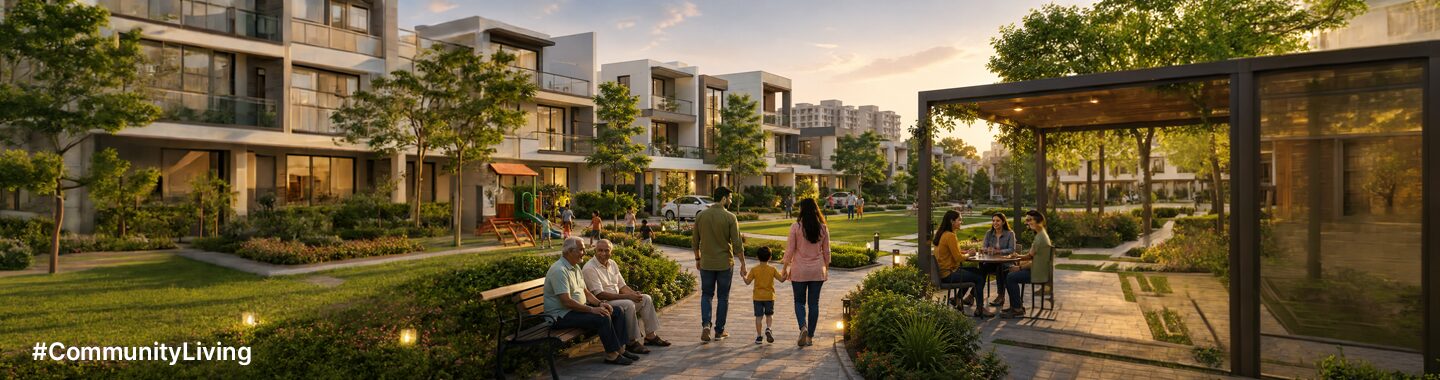
Community living refers to residential environments designed to encourage interaction and shared experiences among residents.
It can include:
- Clubhouses
- Parks and landscaped spaces
- Fitness facilities
- Sports areas
- Children’s play zones
- Community halls
- Walking and cycling paths
- Co-working spaces
- Social gathering areas
- Wellness amenities
But community living isn’t simply about the number of amenities.
It is about how thoughtfully a development creates opportunities for people to connect.
Why Is Community Becoming Important?
1. Urban Life Can Feel Increasingly Isolated
Modern urban living offers convenience but can sometimes reduce meaningful social interaction.
Long commutes, busy work schedules and digital communication can leave people with fewer opportunities to connect with neighbours.
A well-designed residential community can help change that.
Shared spaces create natural opportunities for interaction—whether it is children playing together, residents exercising in the morning or neighbours meeting at a clubhouse.
2. Families Want More Than Four Walls
For families, the value of a home extends beyond the apartment.
Parents may consider:
- Where their children can play
- Whether there are safe walking spaces
- Whether recreational activities are available
- How easily they can interact with other families
- Whether the environment encourages an active lifestyle
This is one reason lifestyle homes are becoming more relevant.
The home is increasingly viewed as part of a broader ecosystem.
3. Amenities Are Becoming Experience Spaces
A swimming pool is no longer just a swimming pool.
A clubhouse is not merely a building.
A landscaped garden is not simply an aesthetic feature.
When thoughtfully planned, these spaces can become part of residents’ daily routines.
A fitness centre can support wellness. A community hall can host celebrations. A children’s area can encourage outdoor play. A café can become a place for informal conversations.
The value comes from use, not just presence.
4. Work-Life Balance Is Changing Home Preferences
Hybrid and flexible work arrangements have changed how people use their homes.
A buyer may now want a development where work, wellness, recreation and social interaction are all accessible without long travel.
This is particularly relevant in large urban markets where commuting can consume significant time.
A community that provides recreational and social infrastructure close to home can therefore become an attractive proposition.
5. Community Living Can Appeal Across Generations
One of the strongest benefits of a well-planned community is that different generations can use it differently.
Children may use play areas and sports facilities.
Young adults may value fitness, cafés and social spaces.
Parents may appreciate community activities and security.
Older residents may value walking paths, green spaces and opportunities for social interaction.
This creates a more inclusive residential environment.
What Should Buyers Look For?
Not every project marketed as a community actually delivers a meaningful community experience.
When evaluating a project, look beyond the brochure.
Examine the layout
Are open spaces accessible to residents?
Are amenities distributed thoughtfully?
Is there enough room for people to gather?
Evaluate usability
Ask whether the amenities match your lifestyle.
A large list is not necessarily better than a smaller set of well-designed facilities.
Look at maintenance
An impressive clubhouse at launch can lose its value if facilities are poorly maintained.
Understand maintenance charges and how the community is managed.
Consider density
Very high density can affect how comfortably residents use shared spaces.
Look at the overall master plan rather than only the apartment.
Think about future needs
Your lifestyle may change.
A young couple may eventually have children. Parents may move in. Work patterns may evolve.
A strong community can offer flexibility as those needs change.
Community vs Traditional Housing
Traditional housing will continue to have a place in the market.
Not every buyer needs extensive amenities or a large integrated development.
But community-focused projects can offer an additional layer of value.
The distinction is similar to choosing between a house and a lifestyle ecosystem.
One primarily provides a private space.
The other can provide private space plus shared experiences and infrastructure.
Is Community Living Worth Paying More For?
That depends.
A buyer should not pay a premium simply because a project uses the word “community” in its marketing.
Instead, evaluate the actual value.
Ask:
Will I use these spaces?
Will they improve my daily routine?
Are they well designed?
Are maintenance costs reasonable?
Does the community suit my family’s needs?
If the answer is yes, the premium may make sense as part of the overall lifestyle value.
The Future of Residential Living
The growing interest in community living reflects a larger change in how Indians think about housing.
The home is becoming less isolated from the rest of life.
People increasingly want convenience, wellness, recreation, social connection and green spaces to coexist within their residential environment.
This does not mean every home needs to become a mega township.
It means residential development is becoming more experience-driven.
The best communities will likely be those that understand an important principle:
People don’t simply want places to live. They want places that help them live better.
The Bottom Line
The rise of lifestyle homes and community-focused developments is not simply an amenities trend.
It reflects changing expectations around convenience, wellness, family life and social connection.
For buyers, the key is to look beyond the number of facilities and understand the quality of the overall living experience.
Because ultimately, a great home isn’t only about the space you own.
It is also about the life that happens around it.
Looking for a home that offers more than four walls? Explore vibrant residential communities.
#CommunityLiving #Lifestyle