Sustainable Homes: The Future of Indian Real Estate
Why Green Buildings and Sustainable Homes Are Becoming a Smarter Choice for Indian Homebuyers
For decades, the idea of a good home was largely defined by its location, size, amenities and price.
Today, another factor is becoming increasingly important:
How sustainably is it built and operated?
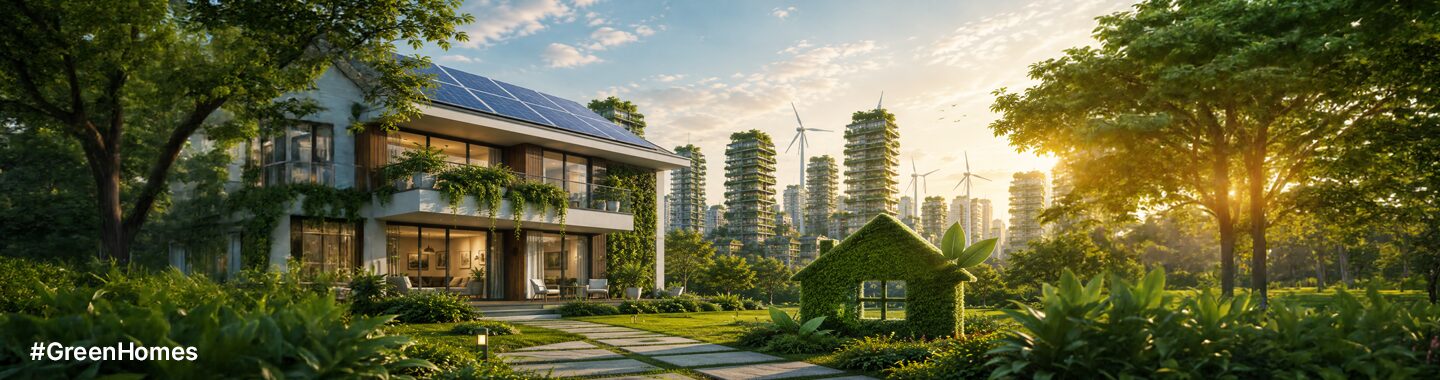
From energy-efficient buildings and rainwater harvesting to solar power, natural ventilation and green spaces, sustainability is moving from being a niche consideration to an important part of India’s real estate conversation.
As cities grow, temperatures rise and homebuyers become more conscious of their long-term expenses and environmental impact, Sustainable Homes are emerging as a compelling combination of responsible living and smart real estate ownership.
What Are Sustainable Homes?
A sustainable home is designed to reduce its environmental impact while creating a healthier, more efficient and comfortable living environment.
This can involve everything from the building’s construction and materials to how it uses energy and water.
Some common features include:
- Energy-efficient lighting and appliances
- Solar power
- Rainwater harvesting
- Waste segregation and recycling
- Water-efficient fixtures
- Natural lighting and ventilation
- Green landscaping
- Energy-efficient building materials
- Smart energy management systems
- Electric vehicle charging infrastructure
Sustainability isn’t about adding one “green” feature to a property.
It’s about creating a home that uses resources more efficiently over its entire lifecycle.
Why Are Sustainable Homes Becoming More Relevant in India?
India’s cities are expanding rapidly.
More people are moving into urban centres, new residential developments are emerging and the demand for energy, water and infrastructure continues to grow.
At the same time, homebuyers are becoming more aware of:
- Rising utility expenses
- Water conservation
- Indoor air quality
- Waste management
- Green spaces
- Energy consumption
- Long-term property value
This is changing what buyers expect from modern homes.
The home of the future isn’t simply expected to be luxurious.
It is expected to be responsible, efficient and future-ready.
1. Green Buildings Can Reduce Energy Consumption
One of the most visible advantages of sustainable design is energy efficiency.
Homes designed with:
- Natural daylight
- Cross ventilation
- Energy-efficient appliances
- LED lighting
- Solar power
- Efficient cooling systems
can potentially reduce dependence on conventional energy sources.
For homeowners, that can translate into lower operating costs over the long term.
For the environment, it means more efficient resource consumption.
It’s a win that extends beyond the initial purchase.
2. Solar Energy Is Changing Residential Living
Solar power is becoming an increasingly relevant feature in residential developments.
Solar installations can support common-area electricity requirements, lighting and other building operations, depending on the project’s design and capacity.
For homeowners, renewable energy can also provide greater awareness and control over energy consumption.
As technology improves, integrating renewable energy into residential developments is likely to become increasingly common.
3. Water Conservation Is Becoming Essential
Water is one of the most important sustainability challenges facing rapidly growing cities.
Sustainable residential projects can incorporate systems such as:
- Rainwater harvesting
- Water recycling
- Sewage treatment
- Low-flow fixtures
- Efficient irrigation
- Drip irrigation for landscaping
These measures can help reduce wastage and improve water management.
For buyers, water sustainability should therefore be considered alongside the property’s location and amenities.
4. Green Spaces Improve More Than Aesthetics
Trees, landscaped gardens and open spaces aren’t simply visual features.
Thoughtfully designed green areas can improve the overall residential environment by providing spaces for recreation, relaxation and community interaction.
Green landscaping can also contribute to shade, biodiversity and better use of outdoor spaces.
This is especially valuable in densely populated urban environments where access to natural surroundings can be limited.
5. Sustainable Homes Can Support Healthier Living
A home’s sustainability features can also influence everyday comfort.
Natural light and ventilation can improve the indoor environment.
Green spaces can create opportunities for outdoor activity.
Better waste management can contribute to cleaner surroundings.
Reduced reliance on inefficient systems can improve resource consumption.
As buyers increasingly consider wellness as part of homeownership, sustainable design is becoming closely linked with quality of life.
6. Sustainability Can Mean Long-Term Savings
A sustainable property may involve a higher upfront investment in certain technologies or systems.
But the cost of ownership isn’t determined only by the purchase price.
Homebuyers should also consider recurring expenses such as:
- Electricity
- Water
- Maintenance
- Cooling
- Waste management
Energy- and water-efficient systems can potentially reduce these operating costs over time.
This changes the way buyers should evaluate property value.
Instead of asking only:
“How much does this home cost?”
Ask:
“How much will it cost me to own and operate this home over the next 10 years?”
7. Sustainable Features Can Strengthen Future Property Appeal
Real estate is a long-term asset.
A home purchased today may be sold or rented years later.
As environmental awareness increases, properties with sustainable infrastructure could become increasingly attractive to future buyers and tenants.
Features such as:
- Energy efficiency
- Renewable energy
- Water conservation
- EV charging
- Green spaces
- Smart home systems
can potentially contribute to a property’s future market appeal.
Sustainability is therefore not only about today’s lifestyle.
It can also be about tomorrow’s demand.
8. EV Infrastructure Is Becoming Part of Sustainable Housing
Electric vehicles are becoming increasingly relevant to India’s mobility landscape.
That means residential developments need to think beyond traditional parking.
EV charging infrastructure can become an important consideration for homebuyers planning for the future.
For developers, integrating charging infrastructure at the planning stage can help create communities that are better prepared for changing transportation needs.
9. Smart Technology Makes Homes More Efficient
Sustainability and technology are increasingly coming together.
Smart home systems can help residents monitor and manage:
- Electricity consumption
- Lighting
- Air conditioning
- Water usage
- Security
- Appliances
The goal isn’t simply to make a home more technologically advanced.
It’s to make resource consumption more visible and controllable.
A smart home that helps you understand where energy is being used can encourage more efficient behaviour.
10. Sustainable Homes Can Make Communities Better
Sustainability shouldn’t stop at individual apartments.
The biggest impact can come when entire residential communities are designed around resource efficiency.
A sustainable development can incorporate:
Energy-efficient buildings + water management + green spaces + waste management + sustainable mobility
Together, these systems can create a more environmentally responsible community.
This is particularly important as India’s urban population continues to grow.
What Should Homebuyers Look For?
Not every property marketed as “green” offers the same level of sustainability.
Buyers should look beyond labels and examine the actual infrastructure.
Ask these questions before buying:
Does the project use renewable energy?
Understand whether solar power is actually installed and what it supports.
How does the development manage water?
Look for rainwater harvesting, water recycling and efficient irrigation.
How much green/open space is available?
Don’t just look at the percentage. Understand how the space is designed and maintained.
What are the energy-efficiency measures?
Check lighting, ventilation, building design and common-area systems.
Is EV charging available?
Consider whether the infrastructure can support your current or future vehicle.
How is waste handled?
Look for segregation, recycling and responsible waste management systems.
Are sustainability claims independently certified?
Where applicable, check for credible green building certifications and supporting documentation.
Greenwashing: What Buyers Need to Watch Out For
As sustainability becomes more desirable, some developments may use “green” terminology primarily as a marketing tool.
This is why buyers should distinguish between sustainability claims and measurable sustainability features.
Don’t stop at:
“This is an eco-friendly project.”
Ask:
“What makes it eco-friendly?”
Look for actual systems, specifications, certifications and measurable features.
A sustainable home should be evaluated on what it does, not simply what it is called.
Sustainable Homes and the Indian Real Estate Market
The shift towards sustainable housing isn’t happening in isolation.
It reflects broader changes across India’s real estate ecosystem.
Developers are increasingly incorporating:
- Green building principles
- Renewable energy
- Water conservation systems
- Smart technologies
- EV infrastructure
- Landscaped open spaces
- Energy-efficient design
At the same time, buyers are becoming more aware of lifecycle costs and environmental impact.
This creates a powerful shift:
Sustainability is moving from a differentiator to an expectation.
The Future May Be More Than Just “Green”
The next generation of sustainable homes will likely combine environmental responsibility with intelligent technology.
Imagine a home that can:
- Monitor its energy consumption
- Optimise lighting automatically
- Manage water usage
- Generate renewable energy
- Support EV charging
- Reduce waste
- Maximise natural light and ventilation
This isn’t simply a greener home.
It’s a more intelligent home.
And as technology becomes more accessible, sustainability could become deeply integrated into everyday residential living.
Why Sustainable Homes Could Be a Smarter Investment
A property is not just an asset you buy.
It’s an asset you own, operate, maintain and potentially sell in the future.
That makes sustainability relevant from several perspectives:
Lower resource consumption
Efficient systems can potentially reduce ongoing expenses.
Better lifestyle
Green spaces, natural light and ventilation can improve everyday living.
Future readiness
EV infrastructure and smart technologies can prepare homes for changing lifestyles.
Potential market appeal
As buyer preferences evolve, sustainable features may become increasingly desirable.
Environmental responsibility
Efficient homes can help reduce resource consumption and environmental impact.
The smartest investment isn’t necessarily the one with the most features.
It’s one that remains relevant as the world around it changes.
The Future of Indian Real Estate Is Sustainable
India’s real estate sector is entering an era where growth and responsibility will need to coexist.
The homes of tomorrow will need to do more than provide shelter.
They will need to use resources intelligently, support healthier lifestyles and adapt to changing environmental and technological realities.
For homebuyers, this means sustainability deserves a place alongside traditional considerations such as location, price, connectivity and amenities.
Because the real question isn’t simply:
“Is this a green home?”
It’s:
“Is this a home designed for the future?”
Final Thoughts
Sustainable homes are no longer just an environmental aspiration. They represent a broader shift in how Indians think about homeownership—towards efficiency, wellness, technology and long-term value.
From Green Buildings and renewable energy to water conservation and smart infrastructure, sustainable development is reshaping what modern residential living can look like.
For buyers, the opportunity is to look beyond the immediate purchase and consider the bigger picture: how the home will perform, feel and remain relevant for years to come.
Invest in eco-friendly developments and choose a home that’s ready for the future.
CTA: Invest in eco-friendly developments.
Hashtags
#Sustainability #GreenHomes #GreenBuildings #SustainableHomes #SustainableLiving #GreenRealEstate #EcoFriendlyHomes #PropTech #IndianRealEstate #PropertyPistol